A child’s learning environment can encourage curiosity long before a lesson begins. At Pearl of Africa International School, thoughtfully designed learning spaces help children observe, ask questions and connect what they see with what they learn in class.
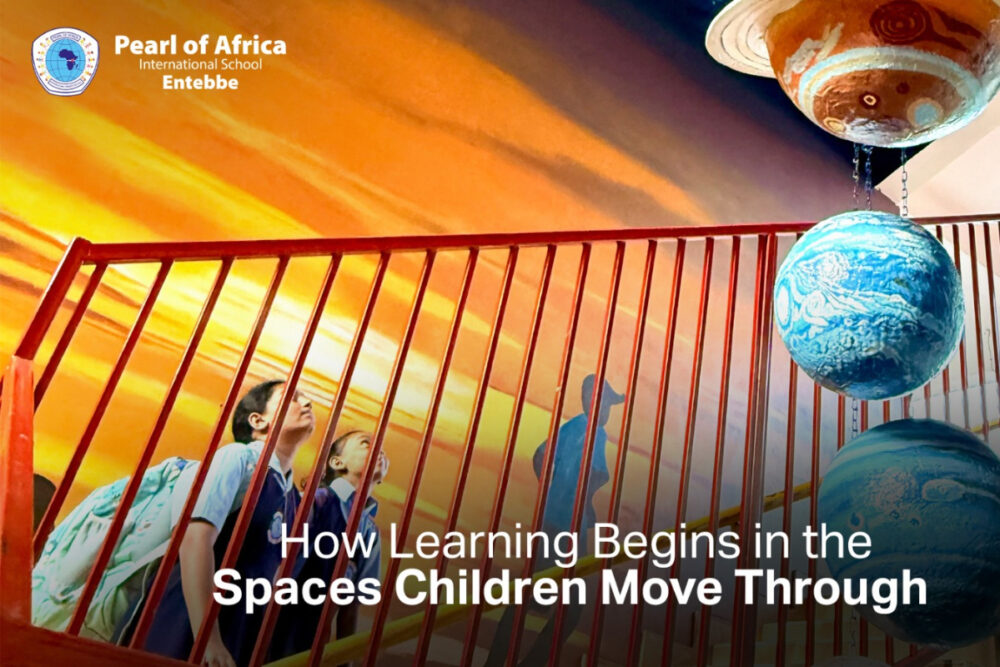
From visual displays to a space-themed ceiling mural featuring a suspended solar system installation, the school environment offers everyday opportunities for discovery. These experiences can help children develop an interest in new subjects and become more confident in exploring unfamiliar ideas.
For parents choosing a school, the learning environment is worth considering alongside the curriculum, teaching quality and academic pathways. The spaces children experience each day can contribute to how they engage with learning and interact with the world around them.
How The School Environment Encourages Curiosity
Children are naturally observant. They notice colours, shapes, displays, sounds, conversations and small details that adults may pass without a second thought.
When schools create thoughtful learning environments, these details can become part of the learning journey. They encourage children to pause, compare, imagine and connect their observations with ideas they encounter in the classroom.
At Pearl of Africa International School, learning spaces are designed to encourage curiosity beyond the classroom. In addition to visual displays, features such as the space-themed ceiling mural and suspended solar system installation invite children to observe their surroundings and ask questions.
For example, a child walking beneath the planets might recognise Saturn by its rings or wonder about Mercury. They may ask why some planets appear larger than others or become interested in finding out more about space.
These moments can lead to conversations, further questions and independent exploration. As a result, everyday surroundings become opportunities to connect observation with learning.
Why Learning Beyond The Classroom Matters
Learning does not have to happen only during a lesson. Children can encounter ideas throughout the school day, including while moving between classrooms or spending time in shared spaces.
A visible reminder of a science topic, for instance, can help make an unfamiliar concept more recognisable. Similarly, displays of pupils’ work can encourage children to share ideas and take pride in their achievements.
However, a meaningful learning environment does not need to be elaborate. A reading corner, a classroom display or a shared area that encourages questions can all support discovery.
What matters is the purpose behind the space and how it complements children’s learning experiences. When environments encourage observation and exploration, children have more opportunities to engage with ideas in different ways.
What Parents Should Look For In A School’s Learning Environment
When choosing a school, parents often consider its curriculum, teachers, facilities and academic pathways. These are important factors, but the everyday learning environment also deserves attention.
Parents may wish to consider whether school spaces encourage children to explore, ask questions and share their ideas. They can also look at how classrooms and shared areas support different interests, learning activities and opportunities for independent discovery.
Additionally, a welcoming environment can help children feel comfortable as they move through their school day. Spaces that invite participation and recognise pupils’ work can contribute to a sense of belonging.
At Pearl of Africa International School, the learning environment forms part of the wider educational experience. The school aims to create spaces that support inquiry, imagination and confidence, helping learners recognise that learning extends beyond a single classroom, lesson or subject.
Turning Everyday Observations Into Deeper Learning
Children often remember the moments that make them curious. They remember when someone welcomes a question or when a familiar topic suddenly becomes real.
A child who pauses to look at a planet today may later ask about space, distance, gravity or the universe. One question can lead to another, creating opportunities to explore ideas in greater depth.
Furthermore, these experiences can encourage children to take an active interest in what surrounds them. They begin to see learning as something they can pursue through observation, conversation, creativity and exploration.
At Pearl of Africa International School, the aim is to nurture this sense of discovery throughout the school day. The school wants children to feel that there is always something worth noticing, something worth asking about and something new to understand.
Because in the right environment, even an ordinary walk through school can become the beginning of a question.