
The World Food Programme (WFP), together with the Novo Nordisk Foundation and the Grundfos Foundation, have announced the launch of the third phase expansion of their flagship school meals partnership.
The initiative represents the largest private sector commitment to school feeding in WFP’s history and will scale up Home-Grown School Feeding models across Uganda, Kenya and Ethiopia.
Supporting Nutrition, Farmers and Climate Resilience
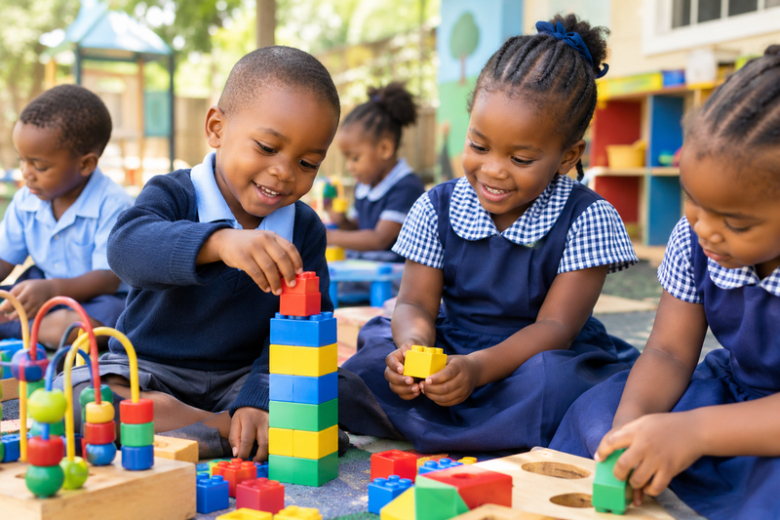
The programme will provide 366,000 children with nutritious, locally sourced meals while supporting more than 57,500 smallholder farmers over the next five years.
It aims to strengthen local food systems by linking schools with nearby farmers, introducing clean energy solutions, and building resilience against climate shocks.
Phase III of the initiative focuses on three key areas: sourcing food from regenerative agriculture, improving the nutritional quality of meals, and making school kitchens more climate friendly.
WFP Highlights Impact of School Meals Investment
“School meals are one of the best investments a government can make in a nation’s future and the results speak for themselves. We know school meals keep children learning. We know buying food locally strengthens livelihoods for farmers, as well as the markets and communities around them. And we know this can be done in ways that are good for people and good for the planet. This record contribution shows what is possible when partners come together.”
Cindy McCain
Strong private sector funding commitment
The partnership is supported by a granting frame of up to USD 77.75 million from the Novo Nordisk Foundation. The Grundfos Foundation is contributing USD 3.1 million over three years, with the final tranche of USD 15.4 million subject to approval.
“Healthy diets in childhood are the foundation for lifelong health. This partnership brings our existing commitment to supporting homegrown school feeding programmes in Eastern Africa to a new level.”
Mads Krogsgaard Thomsen
Kim Nøhr Skibsted added:
“Safe and reliable water supply is essential for school feeding programmes: it enables local food production, preparation of safe and nutritious meals in schools, and strengthens communities’ ability to withstand climate shocks. By scaling up climate-smart, inclusive Home-Grown School Feeding programmes, WFP and partner countries can build resilient local food systems that deliver lasting benefits for both children in schools and smallholder farmers.”
Expansion Across East Africa and Global Education Goals
This marks the third phase of a partnership that began in Rwanda and Uganda before expanding to Kenya, with Phase II currently reaching 321,400 students across 375 schools.
Phase III will extend the programme into Ethiopia for the first time, strengthening regional impact and scaling up its reach.
The initiative also supports the School Meals Accelerator under the School Meals Coalition, aiming to help governments scale national school feeding systems and improve meals for an additional 100 million children by 2030.
School Meals as a Global Development Priority
School feeding programmes are increasingly recognised as a key investment in education, health and food systems. Since 2020, global funding has nearly doubled, rising from USD 43 billion to USD 84 billion annually, with the majority financed through domestic budgets.
Today, 466 million children globally receive school meals, an increase of 80 million in just four years.
However, many countries still face challenges in securing long-term funding and integrating school meals into national systems. The partnership aims to demonstrate how locally sourced, nutrition-focused school meals can drive broader transformation in global food systems.