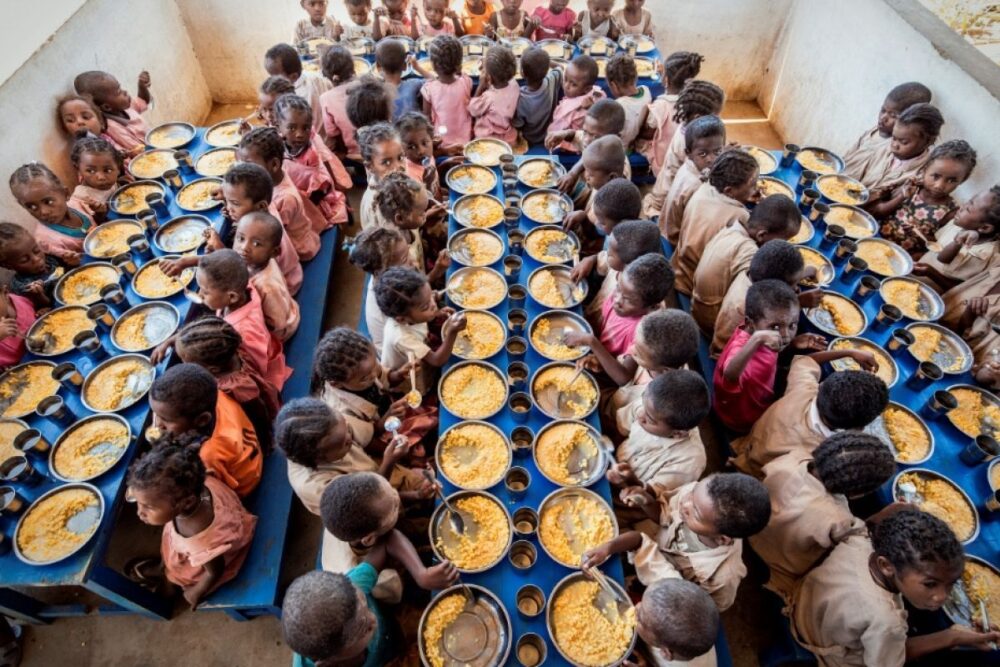
Student well-being is closely linked to access to basic needs, and nowhere is this more evident than in school nutrition and health programmes. Across Africa, initiatives aimed at feeding children and supporting their health are proving to be a cornerstone of educational success, ensuring that millions of students are able to attend school consistently and thrive academically.
At-a-Glance
- R10 billion is South Africa’s annual budget for school feeding.
- 9 million pupils children fed daily in South African public schools.
- 500+ schools are receiving WFP-supported meals in drought-affected areas of East Africa.
- 30-50% typical improvement in attendance reported after deworming initiatives.
- 2-3 times, increased likelihood of students staying in school when meals and health support are provided.
The Vital Role of School Feeding Programmes
In South Africa, the government allocates around R10 billion annually to provide meals to nine million pupils across public schools. These programmes do more than fill stomachs; they provide the foundation for learning. Children who receive nutritious meals at school are better able to concentrate in class, participate actively, and retain information effectively.
Similarly, the World Food Programme (WFP) supports school feeding initiatives in drought-affected regions of East Africa. For many students in these areas, the meals provided at school are often the most substantial of their day. By alleviating hunger, these programmes ensure that children can focus on learning instead of worrying about when they will eat next.

Supporting Learning Beyond the Classroom
Nutrition is just one part of the equation. Health programmes in schools, including deworming campaigns and menstrual hygiene management, are critical in maintaining student attendance and engagement. Deworming initiatives, for example, improve children’s energy levels and reduce absenteeism, directly impacting their ability to participate in lessons.
“Investing in child nutrition and health is not charity, it is smart development. Healthy children are the foundation of prosperous societies.”
Dr. Tedros Adhanom Ghebreyesus (WHO Director-General)
Menstrual hygiene programmes are equally transformative, especially for adolescent girls. By providing access to sanitary products and education about menstrual health, schools help prevent absenteeism caused by a lack of resources or knowledge. These initiatives ensure that girls remain in school consistently, improving their long-term academic outcomes.
The Link Between Health, Nutrition, and Academic Success
Studies show that access to nutrition and health programmes is closely linked to improved learning outcomes. Children who are well-fed and healthy are more attentive, retain knowledge better, and are more likely to engage in classroom activities. Conversely, students who face hunger or untreated health issues often struggle to meet their academic potential.
Parents play a crucial role in reinforcing these programmes by encouraging balanced diets, hygiene practices, and regular health check-ups at home. When combined with school initiatives, these efforts create a supportive environment in which children can flourish academically and socially.
Fast Facts
- Over nine million South African children receive daily school meals through government programmes.
- The World Food Programme supports school feeding initiatives in drought-affected areas of East Africa.
- Menstrual hygiene initiatives help adolescent girls stay in school consistently, reducing barriers to learning.

Why These Programmes Matter to Parents and Students
For parents, understanding the impact of school nutrition and health programmes highlights the importance of school engagement and advocacy. Supporting these initiatives helps ensure that children receive the resources they need to succeed.
For students, these programmes create a learning environment where focus, participation, and enjoyment are possible. Access to nutritious meals and healthcare support is fundamental to academic achievement and overall wellbeing.
Looking Ahead: Expanding Student Wellbeing Programmes
Governments, NGOs, and community stakeholders continue to strengthen school nutrition and health programmes across Africa. Innovation and investment in these areas are key, ensuring that every child has the opportunity to learn without the distraction of hunger or illness.
“Healthy children learn better. Schools play a crucial role in giving every child a fair chance to succeed.”
Michelle Obama (Former First Lady of the USA)
By prioritising wellbeing alongside academics, schools are nurturing the next generation of leaders, thinkers, and change-makers. When students are healthy, well-fed, and supported, they are empowered to excel, not just in school, but in life.