For parents and educators, understanding reading levels can make it easier to choose books that match a child’s reading ability. Reading Planet book bands provide a structured way to identify suitable texts as children develop their decoding, fluency, vocabulary and comprehension skills.
Developed by Hachette Learning, Reading Planet is a whole-school reading programme for children aged 3 to 11. Its books are organised into colour bands and levels that gradually increase in difficulty.
The approach considers factors such as the amount of text on each page, sentence structure, book length, language complexity, plot, characterisation and, for decodable readers, phonics progression.
For schools, this can help staff match children with books that provide an appropriate level of challenge. For families, understanding the bands can make home reading more manageable and purposeful.
How Reading Planet Book Bands Work
Reading Planet book bands group books according to increasing levels of reading difficulty.
The programme explains that children need books that match their age and reading ability. Books that are too difficult may cause frustration, while books that are too easy may provide limited opportunities for developing reading skills.
Therefore, children can move through the bands as their reading becomes more accurate and confident.
The colour bands appear on book covers and spines. This allows teachers and parents to identify books at an appropriate reading level more easily.
Book bands can also help schools bring together books from different reading schemes. Books within the same band or level can be paired because they are intended to provide a broadly similar level of reading challenge.
Reading Planet Book Bands For Ages 3 To 6
The early years and Reception levels introduce children to books through carefully graduated stages.
At the Lilac and Pink levels, books may contain no words or very short sentences. They focus on picture clues, early vocabulary and basic left-to-right tracking.
Red, Yellow and Blue levels introduce simple high-frequency words and short, repetitive sentence structures.
As children progress to Green and Orange, they encounter longer sentences, simple punctuation and early chapter or split-narrative structures.
| Band | Level | Typical Features |
|---|---|---|
| Lilac | 0 | Wordless books, picture clues and early tracking |
| Pink | 1B | First words and early phonics |
| Red | 2A | Simple high-frequency words |
| Yellow | 3 | Repetitive sentence structures |
| Blue | 4 | Developing decoding and simple text |
| Green | 5 | Longer sentences and simple punctuation |
| Orange | 6 | More developed narratives and early chapter structures |
Reading Planet states that books from Lilac+ to Orange are levelled according to phonics decodability. These books are also Lexile and CEFR levelled, while being mapped to the PYP and Cambridge curricula and Cambridge YLE tests.
This progression can support children as they move from recognising words and sounds towards more independent reading.
Reading Planet Book Bands For Ages 6 To 7
During Key Stage 1 and Lower Primary, children move towards longer and more complex texts.
Turquoise, Purple and Gold books introduce denser paragraphs, deeper character development, more complex plots and a wider range of layouts.
White and Stars provide longer transitional chapter books. These texts help bridge the gap between early reading and fluent independent reading.
| Band | Level | Reading Development |
|---|---|---|
| Turquoise | 7 | Denser paragraphs and developing comprehension |
| Purple | 8 | More complex plots and character development |
| Gold | 9 | Increasingly independent reading |
| White | 10 | Longer transitional chapter books |
| Stars | 11 | Bridge towards fluent independent reading |
For schools using Rocket Phonics Online, band assessment quizzes can help determine whether a learner is ready to move to the next level.
The quizzes cover bands from Lilac to White in Reading Planet Online. Rocket Phonics Online and Rocket Phonics Online Next Steps include assessment quizzes from Pink A to White.
These assessments are designed to check whether learners are secure with relevant letter-sound correspondences and common exception words at their current level.
Reading Planet Book Bands For Ages 7 To 11
For Key Stage 2 and Upper Primary, Reading Planet uses space-themed names for its colour bands.
The levels range from Stars through Mercury, Venus, Earth, Mars and Jupiter, followed by Saturn and Supernova.
| Band | Level | Key Characteristics |
|---|---|---|
| Stars | 11 | Transitional independent reading |
| Mercury | 12 | Increasingly sophisticated vocabulary |
| Venus | 13 | More developed narratives |
| Earth | 14 | Greater reading independence |
| Mars | 15 | More complex texts and fewer illustrations |
| Jupiter | 16 | Advanced independent reading |
| Saturn | 17 | Complex themes and challenging texts |
| Supernova | 18 | High-level independent reading |
Stars to Jupiter cover Levels 11 to 16. These books support increasingly independent reading, with more sophisticated vocabulary, subtle humour, tension and fewer illustrations.
Saturn and Supernova cover Levels 17 and 18. These books address more complex themes and are intended to support children as they become increasingly independent readers.
The space-themed system is used because there is no single standard naming system across all reading programmes. However, Reading Planet states that its levels can still be matched with levels used in other schemes.
Reading Planet Strands And Their Purpose
Reading Planet includes several strands designed to support different stages and needs.
| Reading Planet Strand | Bands | Ages | Main Purpose |
|---|---|---|---|
| Lift-Off/Lift-Off First Words | Lilac-Lilac+ | 3-4 | Wordless and first-words books |
| Rocket Phonics | Pink-Orange | 3-6 | Phonics attainment and wider literacy |
| Comet Street Kids | Pink-White | 4-7 | Fiction with diverse characters and curriculum links |
| Galaxy | Pink-White | 4-7 | Curriculum-linked fiction and non-fiction |
| Cosmos | Stars-Supernova | 7-11 | Shared, guided and independent reading |
| Astro | Stars/Turquoise-Supernova/Earth | 7-11 | High-interest, lower-reading-level texts |
Lift-Off and Lift-Off First Words cover Lilac and Lilac+ and are aimed at children aged 3 to 4. They include wordless and first-words books.
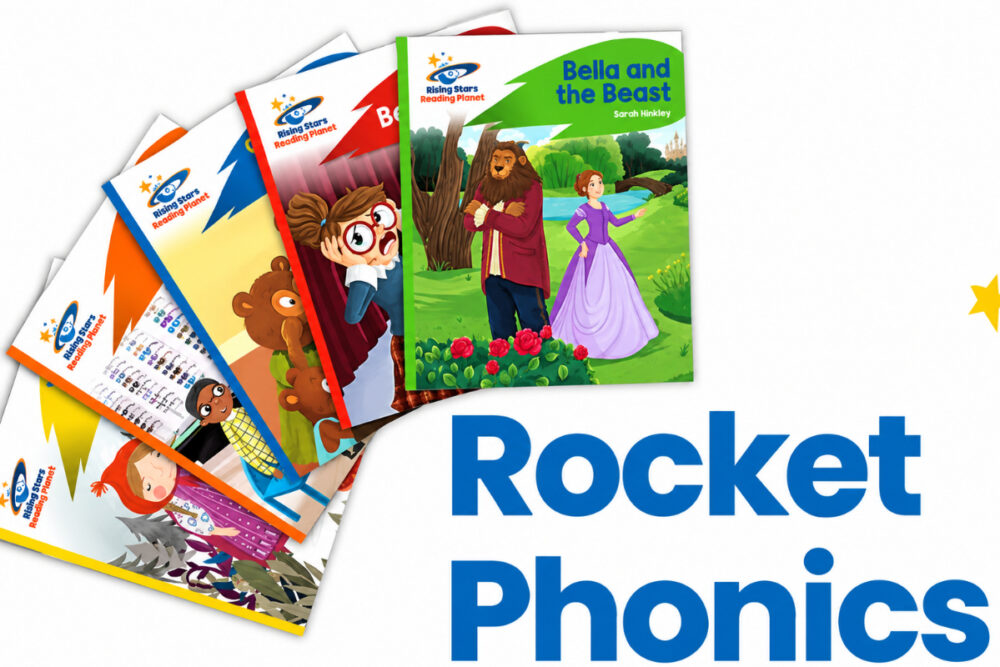
Rocket Phonics covers Pink to Orange for children aged 3 to 6. It is a Department for Education validated programme that supports phonics attainment alongside wider literacy development.
Comet Street Kids covers Pink to White for children aged 4 to 7. The series features diverse characters and links reading with the wider curriculum.
Galaxy also covers Pink to White. It includes curriculum-linked fiction and non-fiction, alongside poetry, playscripts and mystery stories.
Cosmos covers Stars to Supernova for children aged 7 to 11. It offers books for shared, guided and independent reading.
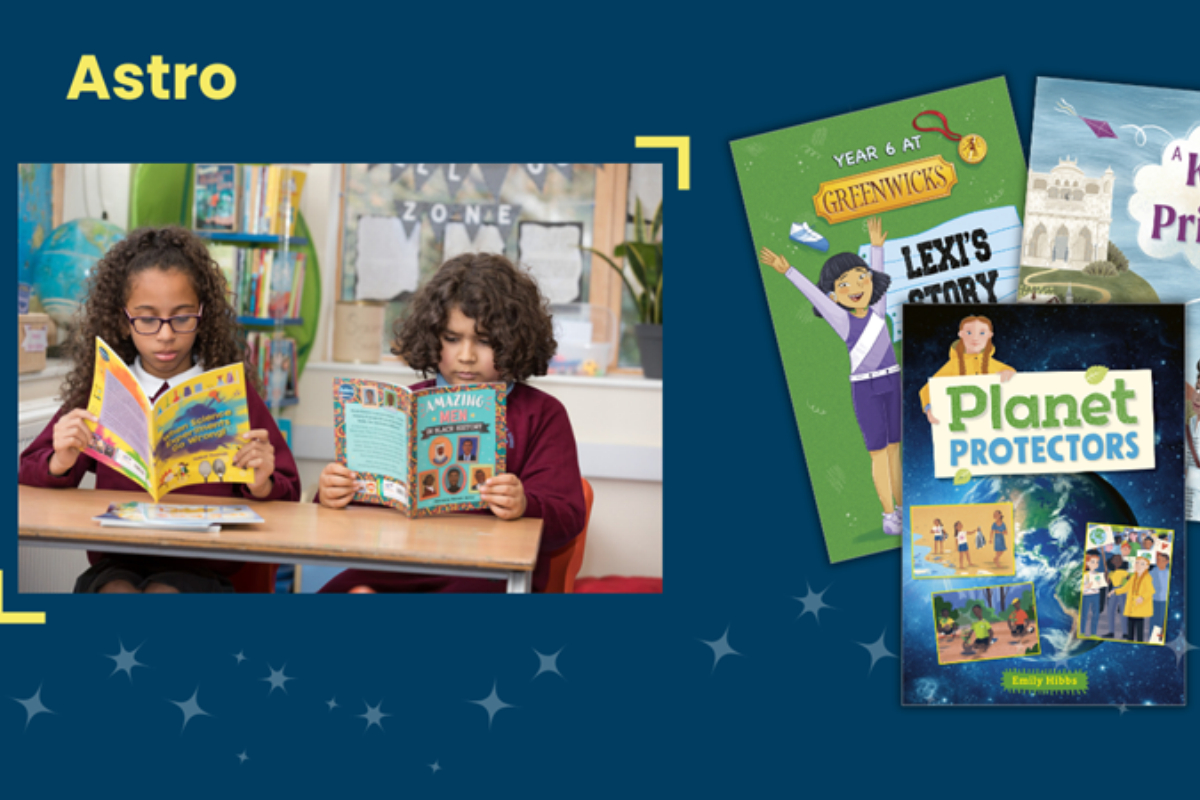
Astro covers a range of levels and is designed for pupils who may be struggling with reading or reluctant to engage with books. It includes graphic novels, magazine-style non-fiction and mini-series fiction.
Reading Planet Book Bands At A Glance
The following table provides a simplified overview of the Reading Planet progression.
| Reading Age | Book Band | Level | Main Reading Development |
|---|---|---|---|
| Ages 3 to 4 | Lilac | 0 | Wordless books and early reading behaviours |
| Ages 3 to 4 | Pink | 1B | First words, picture clues and early phonics |
| Ages 4 to 6 | Red | 2A | Simple high-frequency words and sentences |
| Ages 4 to 6 | Yellow | 3 | Repetitive sentence structures and developing decoding |
| Ages 4 to 6 | Blue | 4 | Increasing confidence with simple texts |
| Ages 4 to 6 | Green | 5 | Longer sentences and simple punctuation |
| Ages 4 to 6 | Orange | 6 | More developed narratives and early chapter structures |
| Ages 6 to 7 | Turquoise | 7 | Denser paragraphs and developing comprehension |
| Ages 6 to 7 | Purple | 8 | More complex plots and character development |
| Ages 6 to 7 | Gold | 9 | Increasingly independent reading |
| Ages 6 to 7 | White | 10 | Transitional chapter books |
| Ages 6 to 7 | Stars | 11 | Bridge towards fluent independent reading |
| Ages 7 to 11 | Mercury | 12 | Increasingly sophisticated independent reading |
| Ages 7 to 11 | Venus | 13 | More complex vocabulary and narratives |
| Ages 7 to 11 | Earth | 14 | Developing fluency and comprehension |
| Ages 7 to 11 | Mars | 15 | Sophisticated texts and fewer illustrations |
| Ages 7 to 11 | Jupiter | 16 | Advanced independent reading |
| Ages 7 to 11 | Saturn | 17 | Complex themes and independent reading |
| Ages 7 to 11 | Supernova | 18 | High-level reading and complex themes |
The exact age at which a child reaches a particular band can vary. Reading ability develops at different rates, so teachers should consider individual progress rather than age alone.
Supporting Struggling And Reluctant Readers
Reading level is only one part of developing confident readers.
For some children, the subject, format and relevance of a book can have a major effect on engagement. This is particularly important for older pupils who are reading below the level expected for their age.
Astro books aim to address this by combining age-appropriate interests with lower reading levels. This allows older pupils to access engaging material without necessarily being given books that feel too young for them.
For parents and educators, this highlights an important consideration. A child who struggles with reading may still have strong interests, knowledge and ideas. Choosing books that respect those interests can help make reading feel more relevant.
Making Phonics Intervention More Consistent
Hachette Learning has also introduced improvements to Rocket Phonics Online, including an Intervention Toolkit.
The toolkit combines five scripted intervention models with an Intervention Activity Bank.
| Intervention Resource | Purpose | Suitable Use |
|---|---|---|
| Model Intervention Sessions | Provides five scripted intervention models | Consistent delivery and support for less experienced staff |
| Intervention Activity Bank | Provides flexible games and activities | Bespoke intervention sessions for individual learners |
| Teacher Training Videos | Explains programme pedagogy and components | Professional development and staff training |
| Timed Games Toggle | Allows timers to be switched off | Phonics practice without time pressure |
| Band Assessment Quizzes | Checks readiness for progression | Supporting decisions about moving between bands |
The scripted sessions are designed to provide a clear structure for staff, including teaching assistants and less experienced practitioners. Meanwhile, the activity bank allows experienced practitioners to adapt activities to individual learners.
The aim is to support short, focused phonics interventions that remain purposeful and responsive.
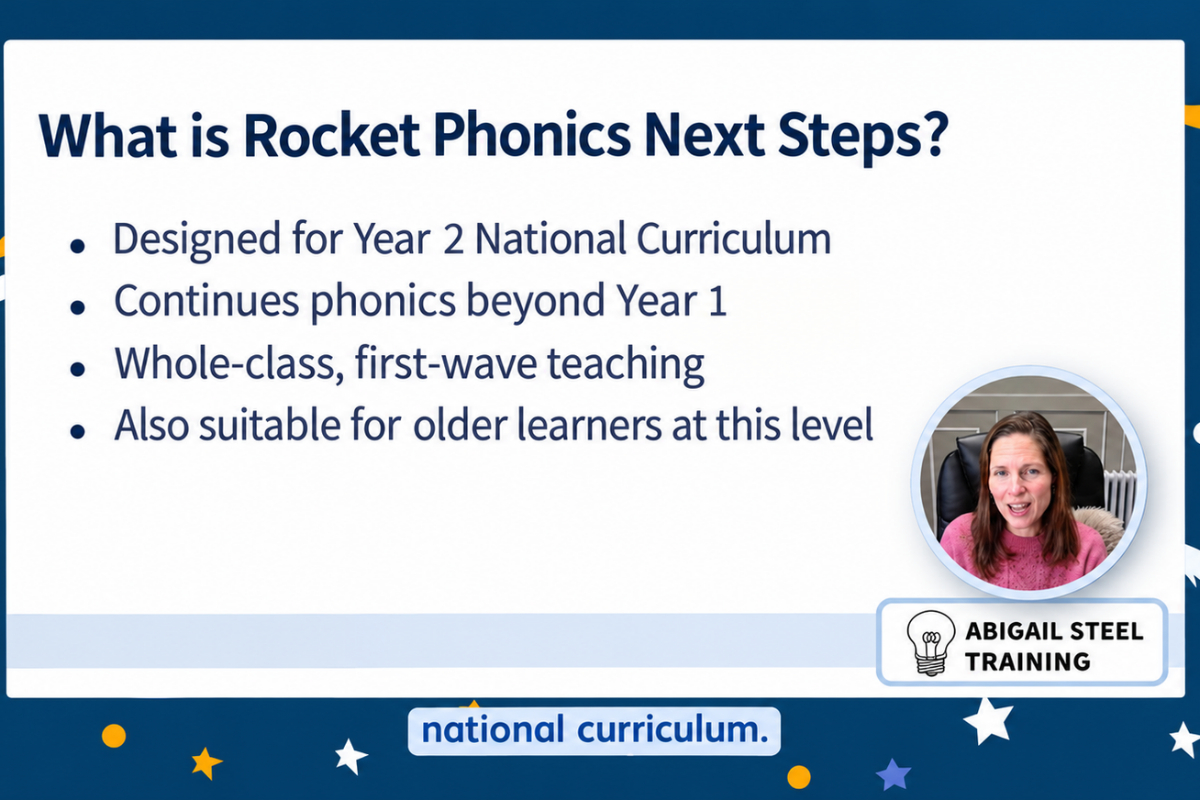
New teacher training videos are also available through the Rocket Phonics Online Training Course subscription. The videos are presented by author Abigail Steel and cover the programme, its pedagogy, the teaching and learning cycle and how to use its components.
Why Reading Choices Matter For Children
Choosing an appropriate book is not simply about finding a level.
Children also need opportunities to encounter different genres, subjects, characters and experiences. Reading Planet includes fiction and non-fiction covering traditional tales, religious stories, important figures, curriculum-linked topics and stories representing different communities.
For schools, a broad collection can support reading across the curriculum. It can also help children discover subjects that interest them beyond their usual reading choices.
For parents, reading together remains an important opportunity to discuss unfamiliar words, characters, ideas and events.
However, children should also have opportunities to choose books for pleasure. A carefully levelled reading book can support skill development, while a favourite story, magazine or non-fiction book can help build a wider reading habit.
Creating A Positive Reading Culture
Schools can also support reluctant readers through activities that make reading a visible and valued part of school life.
At Wallbrook Primary Academy, Sian Cook highlights several approaches, including author visits, reading celebrations, pupil Reading Leaders, parental involvement and access to a wide range of texts.
Teachers can also play an important role by modelling enthusiasm for books.
Cook explains:
“Our teachers are enthusiastic readers who regularly share their favourite children’s books, authors and characters with pupils. By talking passionately about the books they enjoy and recommending texts to classes, staff act as positive reading role models. These conversations spark curiosity, encourage book discussions and inspire children to develop a lifelong love of reading.”
The school also uses Reading Leaders to support pupils who may struggle with reading or feel reluctant to engage with books.
This peer-led approach gives pupils another source of encouragement while helping to create a school culture where reading is valued.
Reading Should Go Beyond Hearing A Child Read
For struggling readers, simply listening to a child read may not address the underlying difficulties.
Wallbrook Primary Academy describes a broader approach in which teachers explicitly teach decoding, fluency, expression, vocabulary and comprehension.
The school explains,
“At Wallbrook, we believe that reading is taught, not simply heard. Our teachers are passionate advocates for reading and consistently model the skills of effective readers through explicit teaching, discussion and shared reading experiences. As a Trust, we have moved away from the phrase ‘hearing readers’ because listening to a child read alone is not enough. Teachers actively teach decoding, fluency, expression, vocabulary and comprehension strategies, carefully modelling what successful reading looks like. Through this approach, alongside their genuine enthusiasm for books and reading, staff inspire children to become confident, capable and enthusiastic readers.”
This approach reinforces the importance of combining reading practice with direct teaching.
For educators, that means considering not only whether a child can read a book independently, but also which skills need further development.
Helping Children Read At Home
Parents do not need to be reading specialists to support children at home.
Regular reading, discussion and encouragement can all contribute to positive reading habits.
Parents can ask children about characters, settings and events. They can also discuss unfamiliar vocabulary and encourage children to explain what they think might happen next.
Importantly, reading should not always feel like a test.
Sharing stories, visiting a library, reading magazines and exploring non-fiction can all help children see reading as part of everyday life.
For older children who are reluctant readers, books linked to their interests can provide a useful starting point. Graphic novels, factual texts, sports-related material, magazines and other formats can help broaden engagement.
What Parents And Schools Can Take From Reading Planet Book Bands
Reading Planet book bands provide a framework for matching books with developing reading skills. However, the wider reading experience remains important.
Children benefit from carefully graduated books, explicit phonics teaching and opportunities to develop fluency and comprehension. At the same time, they need access to stories, information and formats that reflect their interests.
For schools, book bands can support consistency when selecting and assessing reading material. For parents, they offer a useful guide when choosing books that are neither overwhelmingly difficult nor too easy.
Ultimately, the goal is not simply for children to move through colour bands. It is to help them become accurate, fluent and confident readers who choose to read because they enjoy it.