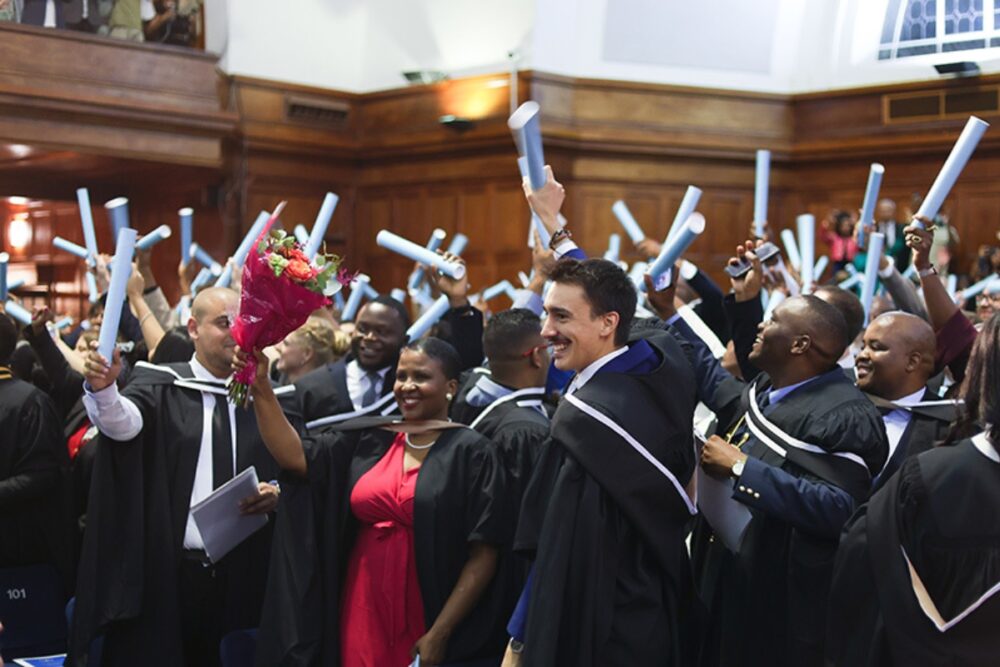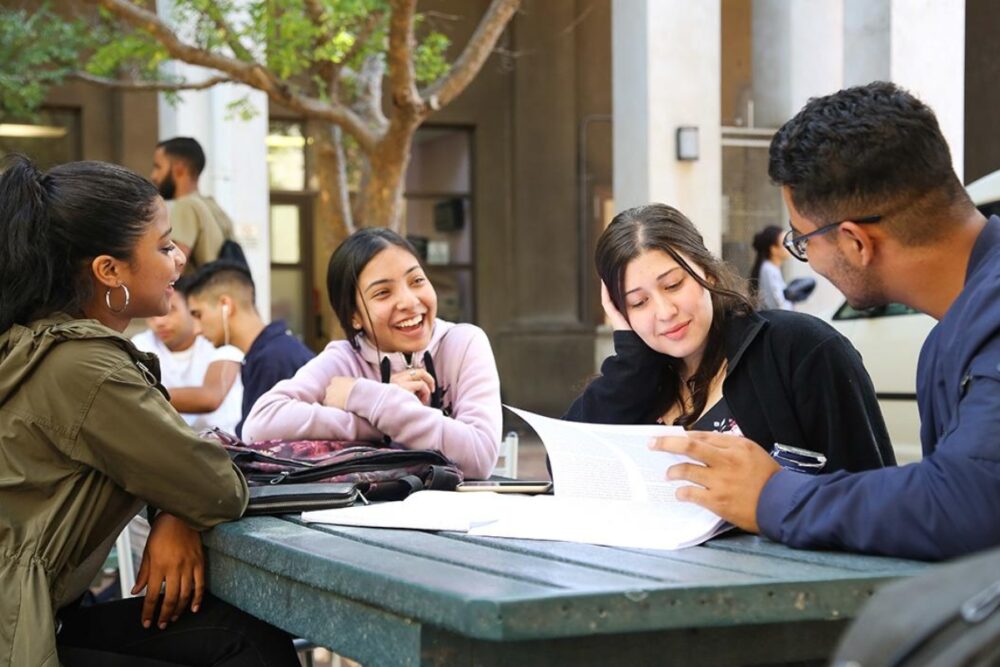
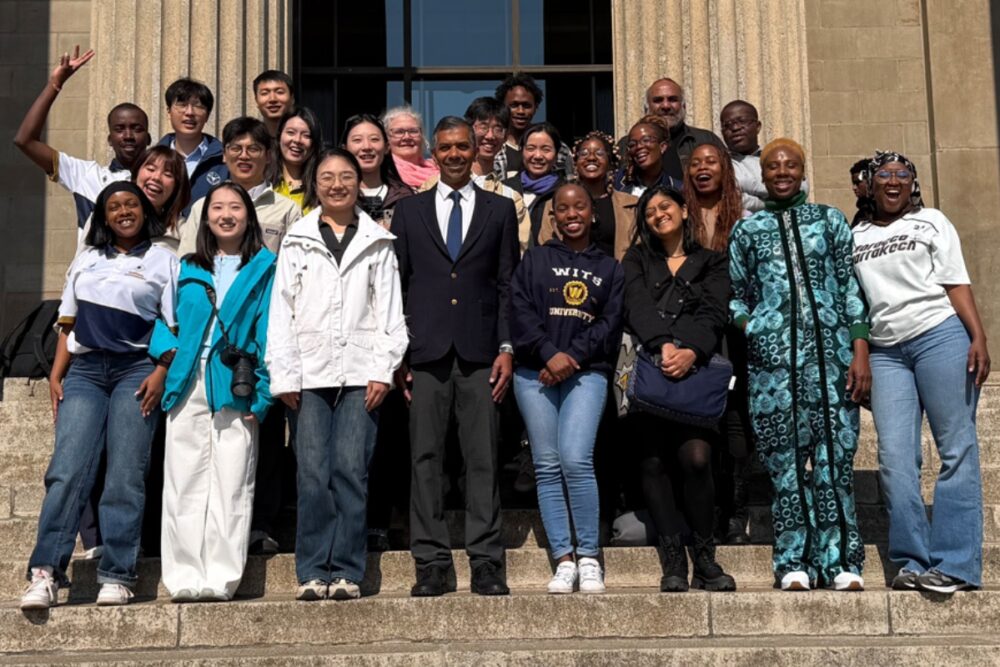
Postgraduate students from South Africa and China have explored how artificial intelligence is reshaping research, careers and professional practice through an international academic exchange at Wits University.
The AI student exchange brought together eight postgraduate students from Zhejiang University in China and 14 doctoral and master’s students from Wits University. The programme focused on Artificial Intelligence and the Future of Work, with discussions spanning technology, research, ethics and the skills graduates will need as workplaces change.
Hosted by the Wits Doctoral Academy, Postgraduate Association, and Internationalisation and Strategic Partnerships Office, the programme provided students with an opportunity to learn across disciplines and cultures.
For students considering international study and research opportunities, the exchange also highlights the value of academic partnerships that extend learning beyond the classroom.
AI Student Exchange Connects Different Disciplines
The AI student exchange examined artificial intelligence from a range of academic perspectives.
Participants explored AI in engineering, mathematics and physics, health and life sciences, art and design, media and international relations, public administration, law, linguistics and archaeology.
This interdisciplinary approach reflects the growing influence of AI across professional fields. Rather than being limited to computing and technology, AI is increasingly shaping how researchers, policymakers, creative professionals and other specialists approach their work.
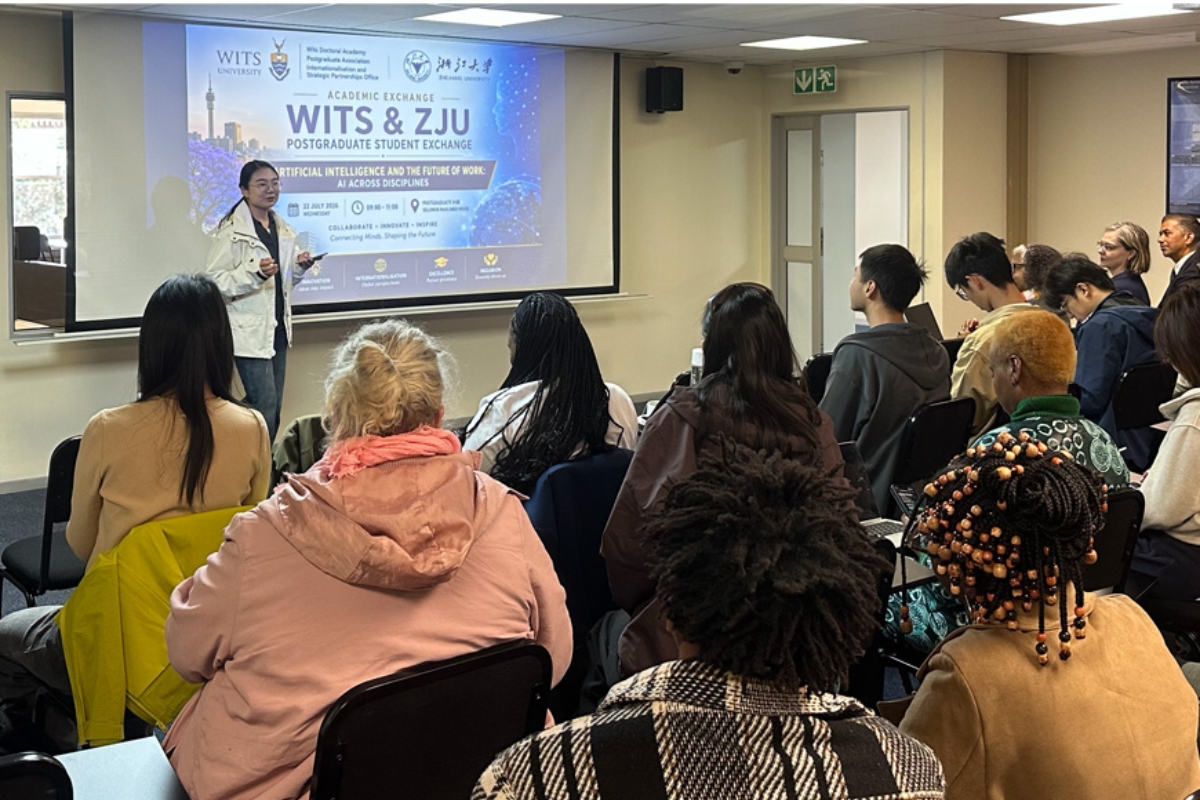
The programme included welcome remarks from representatives of both universities, student-led discussions, interdisciplinary breakout sessions and comparisons of AI developments in South Africa and China.
Students also considered the ethical implications of AI and the human skills that remain important as technology becomes more widely used.
Why International Collaboration Matters for Students
International exchanges can give postgraduate students access to perspectives and research approaches that may differ from those at their home institutions.
For the students involved in the AI student exchange, discussions between South African and Chinese peers provided opportunities to compare experiences and consider how AI is developing in different national and cultural contexts.
Furthermore, student-led sessions encouraged participants to build networks with peers working across different disciplines.
The exchange was organised as part of a wider relationship between Wits and Zhejiang University. It marked the fourth year since the first Zhejiang postgraduate student delegation visited Wits.
Wits students have also travelled to Zhejiang University in 2024 and 2025, helping strengthen academic connections and intercultural understanding.
For postgraduate students, such relationships can create opportunities for future research collaboration, academic networking and international exposure.
Wits Strengthens Its Focus on AI Research
The exchange comes as Wits continues to expand its work in artificial intelligence and data science.
In July 2026, Wits hosted Africa’s first data science conference, bringing together academics, postgraduate students, researchers, industry professionals, policymakers and other stakeholders. The event focused on developing data science and AI approaches that respond to African contexts and priorities.
The university also offers an MSc in Artificial Intelligence covering areas including machine learning, computational intelligence, multi-agent systems, computer vision and natural language processing.
Additionally, Wits has established research activity around AI and the future of work. Its MIND Investec Chair in Artificial Intelligence and Sustainable Business Transformation includes research areas such as AI in financial services, economic development, data governance and the measurement of AI’s societal impact.
These developments provide a broader context for the student exchange, showing how international collaboration can complement institutional research and postgraduate training.
Students Gain Wider Perspectives on Future Careers
A key focus of the programme was the changing relationship between AI and employment.
Students considered how artificial intelligence could influence research, professional practice and future career pathways. At the same time, discussions recognised the importance of skills that technology cannot easily replace, including critical thinking, creativity, communication, ethical judgement and collaboration.
For educators and university leaders, this highlights the need to prepare students for workplaces where technical knowledge and human capabilities increasingly work together.
For students, international academic exchanges can provide a practical way to understand these changes through conversations with peers from different educational and cultural backgrounds.
A Growing South Africa-China Academic Partnership
The Zhejiang delegation also took part in academic and cultural activities across the Wits campus.
The programme included visits to the Faculty of Engineering and the Built Environment, Wits Library, the Evolutionary Studies Institute and the Origins Centre. Students also attended a public lecture at the Wits Anglo American Digital Dome.
Zhejiang University, based in Hangzhou, is one of China’s leading universities and a major research institution.
Meanwhile, Wits has strengthened its international standing. In the 2026 Centre for World University Rankings, Wits was ranked first in Africa and 200th globally among 21,291 universities, placing it within the top 1% worldwide.
The university was also ranked first in sub-Saharan Africa for innovation performance in the 2025 Global Innovation Index.
As both universities continue to support postgraduate exchanges, students stand to benefit from wider academic networks, cross-cultural learning and opportunities to collaborate on global challenges.
For universities, the partnership also demonstrates how international student engagement can support research, innovation and a more globally connected postgraduate community.
What This Means for Education Leaders
The exchange offers a useful example of how universities can prepare students for an AI-shaped employment landscape.
Rather than treating AI as a subject for technology specialists alone, institutions can encourage students from different disciplines to understand its applications, limitations and ethical implications.
International collaboration can strengthen this approach by bringing together students with different academic backgrounds and experiences.
For education leaders, the Wits-Zhejiang partnership demonstrates the potential of student exchanges to connect academic learning with global issues and emerging career needs.
For students, it reinforces the value of developing both specialist knowledge and transferable skills that can support them across changing professional environments.