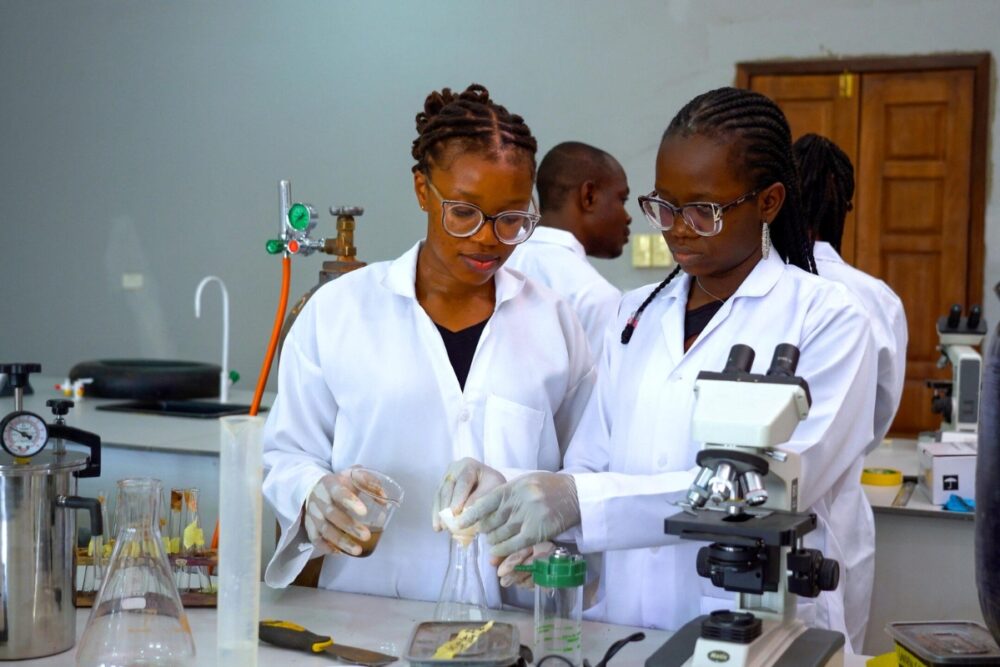

Kampala International University (KIU) has retained its position as Uganda’s leading private university, ranking second nationally and 49th in Africa in the July 2026 Webometrics Ranking.
The result places KIU among Africa’s top 50 universities and comes as the university expands its international academic partnerships through the Erasmus+ Exchange Programme at Ondokuz Mayıs University (OMÜ) in Türkiye.
For students and educators, the development highlights how international collaboration, research and digital visibility are becoming increasingly important in higher education.
KIU Strengthens Its Position In Uganda
The July 2026 Webometrics results place KIU second among universities in Uganda, behind Makerere University. It is also ranked fifth in East Africa.
KIU is the highest-ranked private university in Uganda in the latest ranking. The university’s position reflects its growing focus on research, digital visibility and international engagement.
Webometrics assesses universities through indicators linked to visibility, research excellence, openness and academic impact.
Therefore, the ranking provides students and university leaders with one measure of an institution’s global academic presence.
Erasmus+ Programme Expands International Opportunities
The ranking comes alongside KIU’s participation in the Erasmus+ Exchange Programme at Ondokuz Mayıs University in Türkiye.
KIU Vice-Chancellor Prof Muhammed Ngoma took part in the exchange programme as part of the university’s wider internationalisation strategy. OMÜ also confirmed his visit under the Erasmus+ KA171 Staff Mobility Programme.
Ngoma described the experience as an opportunity to build connections and learn from other higher education systems. Ngoma said,
“It is a very fulfilling experience, full of networking, benchmarking, experience sharing and lots of lessons as far as higher education is concerned.”
The programme supports academic mobility and cooperation between higher education institutions. It can create opportunities for staff development, research collaboration, curriculum development and knowledge sharing.
Why Internationalisation Matters For KIU
For universities, international partnerships can create benefits that extend beyond individual exchange visits. KIU and OMÜ are exploring opportunities for joint research, academic programmes, curriculum development, staff and student exchanges, digital transformation and institutional capacity building.
As a result, students can gain greater exposure to international academic practices. Meanwhile, staff can develop professional networks and identify new opportunities for collaborative research.
The partnership may also strengthen KIU’s international profile through joint academic activities and research outputs.
KIU Links Internationalisation With Global Visibility
Ngoma said international engagement is becoming an important part of the university’s development strategy. Ngoma said,
“Internationalisation is no longer optional for universities that aspire to global relevance. Through Erasmus+, KIU is strengthening partnerships, sharing knowledge, expanding research networks and exposing our staff and students to the best international practices. These collaborations improve academic quality while increasing the University’s global visibility and reputation.”
The statement reflects the wider role of international partnerships in higher education. Universities increasingly use academic mobility and cross-border collaboration to strengthen teaching, research and institutional networks.
For students, these partnerships can also provide opportunities to experience different academic environments and build international connections.
How Erasmus+ Could Strengthen KIU’s Global Position
Erasmus+ supports international collaboration and mobility across higher education. The programme enables student and staff exchanges, professional training, teaching opportunities and research partnerships.
For KIU, participation can provide opportunities to strengthen academic links with international institutions. It can also support staff development, knowledge sharing and collaborative research.
The university’s involvement may benefit students through greater exposure to international academic practices. Furthermore, stronger partnerships can create opportunities for joint programmes, research projects and academic exchanges.
However, rankings should not be the only factor students consider when choosing a university. Programme quality, accreditation, teaching standards, research opportunities, student support and graduate outcomes also matter.
For educators and school leaders, KIU’s progress highlights how international partnerships can support institutional development. Ultimately, combining international collaboration with stronger academic visibility could help KIU build its position in Uganda and across Africa.