Artificial intelligence (AI) is already changing how students learn in Kenya. However, schools and universities face a growing challenge: ensuring learners can use the technology effectively without losing the ability to think independently.
Students are turning to generative AI to explain difficult concepts, prepare presentations and organise assignments. Meanwhile, teachers are experimenting with AI tools to develop lesson plans, create quizzes and adapt explanations to different learning needs.
For parents, educators and school leaders, the question is no longer simply whether AI belongs in education. It is how schools can help students benefit from the technology while protecting academic integrity, privacy and the quality of learning.
A 2025 study involving 137 educators from 13 Kenyan universities found that lecturers recognised the potential of generative AI but raised concerns about academic dishonesty, data privacy, accuracy and over-reliance on the technology.
Educators identified literature searches, summarising academic material, preparing teaching resources and generating ideas as potential uses.
Meanwhile, Kenya is expanding digital access across its education system. However, access to devices and reliable internet remains uneven, raising questions about whether all learners will benefit equally from AI.
AI In Kenyan Classrooms Depends On Digital Access
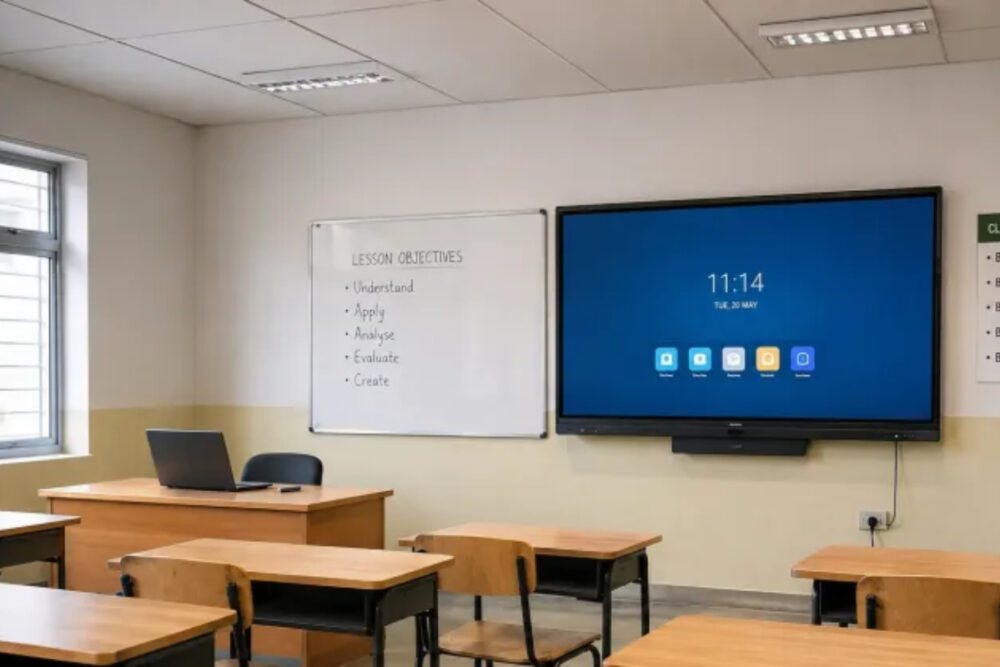
The Kenyan government is investing in digital infrastructure to support learning. In July 2026, the Ministry of Education said 10,382 laptops and an equal number of interactive smart boards were being distributed to Junior Schools across all 47 counties under the Kenya Digital Economy Acceleration Project.
The programme followed training for more than 62,000 teachers on ICT integration.
In addition, a UNICEF-supported programme aimed at connecting 1,000 public primary schools to reliable internet had connected 363 schools by December 2025. More than 277,000 learners had been reached, while over 4,400 teachers had begun integrating digital tools into classroom instruction.
These developments provide a foundation for wider technology use. However, digital access alone does not guarantee that students or teachers can use AI effectively.
A learner with a reliable internet connection, access to suitable devices and guidance from trained teachers may have opportunities unavailable to someone studying in a poorly connected school.
UNESCO Director-General Audrey Azoulay has cautioned that technology should complement rather than replace teachers. Azoulay said,
“Digital technology in schools should not be an end in itself, but a means to an end. No screen can replace a teacher.”
Her warning is particularly relevant in Kenya, where access to devices, connectivity and digitally trained teachers remains uneven.
How AI Is Changing Student Assessment
One of the biggest challenges associated with generative AI concerns how schools and universities assess learning.
For decades, educators have relied on essays, take-home assignments, research projects and examinations to establish what students understand. Generative AI has complicated that process.
Students can now produce essays, summarise books, prepare presentations and receive assistance with mathematical problems within seconds.
As a result, educators must consider whether existing assessment methods adequately measure students’ knowledge and independent thinking.
The answer is not necessarily to prohibit AI altogether. Instead, schools may need to design tasks that require learners to explain their reasoning, defend conclusions, demonstrate practical skills and apply knowledge to unfamiliar situations.
A paper published in the Journal of the Kenya National Commission for UNESCO examined the potential of generative AI in developing examination test items. It noted that AI could help assessment bodies generate large numbers of questions, but subject-matter experts would still need to ensure their quality and appropriate cognitive levels.
Kenya’s 2025 National Qualifications Framework regulations require assessment methods to be guided by expected learning outcomes and Bloom’s Taxonomy, while recognising different approaches to measuring learning achievement.
This provides a useful context for discussions about AI and assessment. Traditional examinations may remain important, but educators could place greater emphasis on practical demonstrations, oral questioning, supervised assignments and students’ ability to explain their work.
Some Kenyan universities are already building capacity in this area.
The Centre for Teaching and Learning Excellence at KCA University held a workshop in February 2025 to train educators in the responsible use of generative AI in instruction, research and assessment.
Similarly, a 2025 workshop at Kenyatta University brought together participants from nine universities to explore the implications of generative AI for higher education teaching, learning, research and assessment.
The next step is to translate these discussions into everyday teaching practices that help educators distinguish genuine understanding from work produced with excessive AI assistance.
Why Teacher Training Matters As AI Expands
Much of the discussion around AI in education focuses on whether students should be allowed to use it. However, teachers also need the knowledge and confidence to guide its use.
An educator unfamiliar with generative AI may struggle to identify inaccurate AI-generated information or understand how students have used the technology in their work.
Similarly, assigning tasks that a chatbot can complete within seconds may reward access to technology rather than a learner’s understanding.
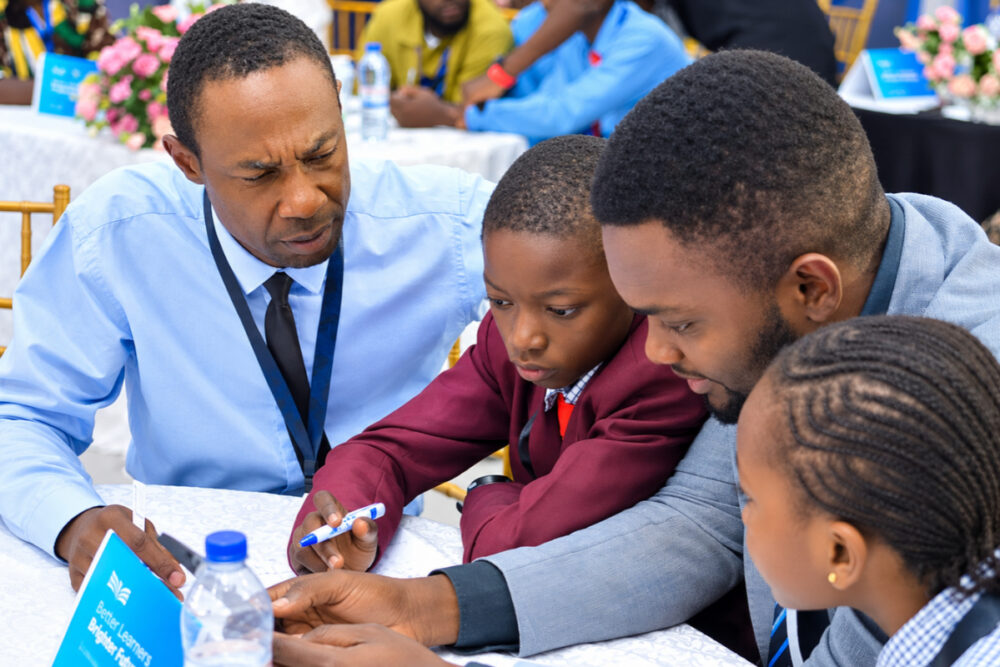
Moses Gitonga, a part-time lecturer at Kenyatta University, said AI should be treated as an assistant to the teacher rather than a replacement for professional judgement. Gitonga said,
“A teacher can use AI to generate lesson ideas, develop questions, simplify difficult concepts and even suggest different ways of presenting a topic. But what comes from AI is only a starting point. The teacher must interrogate that information, verify it and determine whether it is appropriate for the learners before using it.”
He said educators must also understand AI’s limitations, particularly its ability to generate convincing but inaccurate information.
“The biggest mistake would be to assume that because an answer is well written, it is necessarily correct.”
He added that teachers must fact-check AI-generated material, identify bias and avoid entering learners’ personal information into such systems.
These skills go beyond knowing how to operate a computer or use an online learning platform.
Teachers need to understand AI-generated errors, bias, privacy, copyright and academic integrity. They must also recognise when using AI is inappropriate or could undermine a learning objective.
For school leaders, this means considering how professional development can support responsible AI use across different subjects and age groups.
Parents also have a role. Discussing when AI is helpful, why its answers need checking and why students should complete their own work can reinforce responsible habits at home.
Preparing Kenyan Graduates For An AI-Enabled Workplace
Universities face a wider challenge as AI changes professional practice across industries.
Future lawyers, journalists, accountants, engineers, doctors, teachers and software developers will need to understand how AI affects their work.
A law student, for example, may need to verify AI-assisted legal research. A journalism student may have to authenticate synthetic photographs, videos or audio. A medical student may need to understand both the potential and limitations of AI-supported diagnosis.
In each case, using the technology effectively requires more than knowing which tool to open. Graduates must understand when its output can be trusted, when it needs independent verification and when professional judgement must take precedence.
Kenyan universities are beginning to explore these issues through discussions and workshops on AI in teaching, research, assessment and professional practice.
However, preparing students for an AI-enabled workplace does not mean every graduate needs to become a programmer.
Instead, AI literacy should help learners understand what these systems can do, where they can fail and how to use them responsibly within their chosen professions.
For employers, this could mean graduates who can combine technical confidence with sound judgement. For students, it means developing skills that remain useful as technology changes.
The Skills Kenyan Students Need Beyond Coding
Preparing young people for an AI-enabled economy requires more than teaching coding or introducing new digital tools.
Technical knowledge will remain important. However, students will also need skills that help them evaluate information, solve unfamiliar problems and work effectively with others.
The World Economic Forum’s Future of Jobs Report 2025, based on the views of more than 1,000 employers representing over 14 million workers across 55 economies, found that analytical thinking remained the most sought-after core skill.
Resilience, flexibility and agility, leadership and social influence, and creative thinking also ranked highly. Meanwhile, AI and big data, networks and cybersecurity, and technological literacy were among the fastest-growing skills.
The report estimated that 39 per cent of workers’ existing core skills could change by 2030, highlighting the importance of continuous learning and retraining.
For Kenya, these findings reinforce the need to connect digital literacy with critical thinking, creativity, communication and problem-solving.
Students should learn how to use AI tools, but they must also know how to question their answers, verify information, identify bias and protect personal data.
Equally important is understanding when not to use AI. A learner who relies on a chatbot for every answer may miss opportunities to develop independent reasoning and build confidence in their own abilities.
The aim should be to help students use technology as a learning aid rather than a substitute for learning.
Can Kenya Make AI Education Accessible To All?
Kenya’s Competency-Based Curriculum already emphasises critical thinking, creativity, collaboration and digital literacy. These competencies provide a foundation for helping learners navigate AI responsibly.
The challenge is ensuring that students can develop these skills consistently across different schools and communities.
Government investment in devices and connectivity is an important step. The distribution of laptops and interactive smart boards is intended to expand access across Junior Schools, while internet connectivity programmes seek to address another major barrier.
However, infrastructure alone will not determine whether AI improves education.
A learner in a well-resourced school with reliable internet and digitally trained teachers may have a very different experience from someone studying in a school where connectivity remains unreliable.
Research by Rest of World in 2025 highlighted uneven AI adoption in Kenyan schools. It reported that teachers were already using ChatGPT and other AI tools to manage workloads, while limited internet connectivity remained a major obstacle to expanding AI-based education.
This disparity matters because unequal access to AI could reinforce existing educational inequalities.
Students with access to reliable technology and informed guidance may gain additional opportunities to practise skills, explore subjects and receive learning support. Others may be left behind if schools cannot provide comparable resources.
However, when introduced thoughtfully, AI could also help teachers prepare learning materials, explain difficult concepts in different ways and provide additional support to students.
Realising these benefits will require investment in infrastructure, teacher training, curriculum development and clear guidance on responsible use.
School leaders will also need to consider how AI can support learning without compromising student privacy, safeguarding or the relationship between teachers and learners.
Moving Beyond AI Bans In Schools
For Kenyan schools, the debate should move beyond whether AI is entirely good or bad.
Ignoring the technology will not prepare students for workplaces where AI tools are becoming increasingly relevant. Equally, allowing learners to outsource their thinking to machines risks undermining the purpose of education.
A more effective approach would teach students how to use AI critically and responsibly.
This includes reviewing assessment methods, training teachers, updating curricula and giving learners opportunities to explore AI while maintaining human accountability.
It also means making expectations clear. Students should understand when AI assistance is permitted, when they must disclose its use and which tasks they are expected to complete independently.
Parents and educators can reinforce the same principles by encouraging children to question information, check sources and explain concepts in their own words.
Ultimately, Kenya’s readiness for AI will depend on more than the number of devices in its classrooms or the availability of digital tools.
The education system must ensure that learners from different backgrounds can access appropriate technology, receive informed guidance and develop the skills to use it well.
Artificial intelligence may reshape the workplace, but education will help determine whether Kenyan learners enter that future as creators of technology, informed users of it or merely spectators watching others build the future.