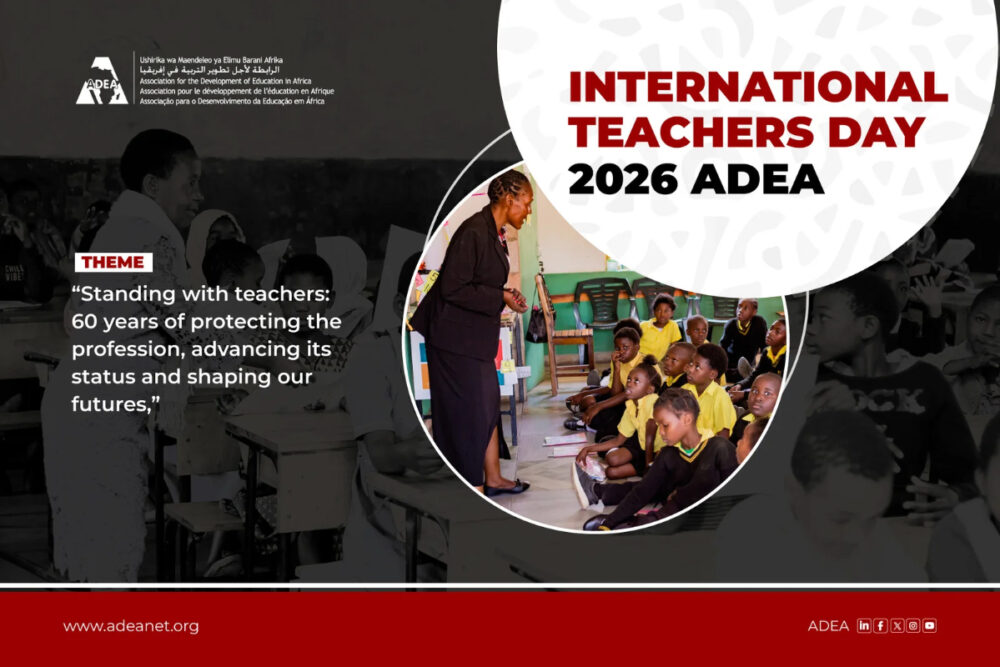
African teachers need sustained investment, professional recognition and better working conditions to help every child learn. Following World Teachers’ Day on 5 October 2026, the Association for the Development of Education in Africa (ADEA) has highlighted the urgent need to turn commitments to teachers into meaningful action.
The global celebration marked six decades since the 1966 ILO/UNESCO Recommendation concerning the Status of Teachers. Its theme, “Standing with teachers: 60 years of protecting the profession, advancing its status and shaping our futures,” encouraged education leaders to reflect on how they protect and support teachers.
For Africa, the challenge goes beyond recruiting more teachers. Countries must also strengthen teacher preparation, improve professional development and create conditions that enable educators to deliver quality learning.
Why African Teachers Need Greater Support
The global shortage of teachers remains a major barrier to achieving universal primary and secondary education by 2030. African countries face the challenge of attracting talented people into teaching while ensuring that existing educators receive the support they need.
However, increasing teacher numbers alone will not resolve the problem. Teachers need quality initial training, opportunities to develop their skills and access to the resources required for effective classroom teaching.
Professional recognition also matters. Teaching requires expertise, sound judgement and an understanding of how children learn. Therefore, education systems must recognise teachers as skilled professionals whose work directly influences children’s learning and future opportunities.
African Education Commitments Must Lead to Action
Across the continent, governments and education stakeholders have made commitments to improve teaching, school leadership and learning outcomes.
At the ADEA Triennale in Accra in October 2025, participants called for greater investment in education, stronger links between teacher preparation and continuous professional development, and improved leadership and accountability. They also emphasised the importance of multilingual teaching and learning.
Meanwhile, the Africa Foundational Learning Exchange (FLEX2026), held in Lilongwe in July, brought together 42 African governments and the African Union to commit to sustained action against learning poverty.
Their priorities included stronger financing for foundational learning, better use of data, evidence-based teaching approaches and responsible use of artificial intelligence. Improving educational access for vulnerable children and those in hard-to-reach communities was another important focus.
These commitments matter because policies can only improve children’s experiences when they translate into meaningful changes in classrooms.
School Leadership and Teacher Development Go Hand in Hand
ADEA has highlighted the importance of strengthening education systems through its work on school leadership, teaching and learning.
As a member of the consortium promoting the African Centre for School Leadership (ACSL), ADEA works to address systemic policy gaps and strengthen school and teaching leadership.
Through its Inter-Country Quality Node on Teaching and Learning (ICQN-TL), hosted by Rwanda’s Ministry of Education, ADEA also brings countries, institutions and experts together to exchange evidence, strengthen capacity and develop approaches suited to local needs.
In addition, its work covers foundational learning, education technology, skills development and education reform.
The underlying principle is clear. Improving learning outcomes requires investment in the people who make learning possible, alongside effective policies and school leadership.
Three Priorities for Improving Teaching and Learning in Africa
1. Put Every Learner at the Centre
Every child should have the opportunity to read with understanding, reason with numbers and develop the foundations for lifelong learning.
To achieve this, teachers need approaches grounded in evidence and suited to the needs of their pupils. Where appropriate, teaching in languages children understand can also help them engage with lessons and build foundational skills.
Children’s perspectives should inform these efforts, too. At FLEX2026, pupils from Nkwiji Primary School reminded Africa’s education leaders that children themselves understand important aspects of what they need to learn.
Listening to pupils can help schools identify barriers, understand learning needs and create more supportive classroom environments.
2. Help Teachers Use Artificial Intelligence Responsibly
Artificial intelligence is creating new possibilities for teaching and learning. It can help teachers prepare lessons, develop learning materials, assess progress and provide additional support to pupils.
However, technology cannot replace a teacher’s professional judgement, knowledge, care or understanding of individual learners.
Teachers therefore need training to assess AI-generated information, verify its accuracy and protect pupils’ personal data. They must also understand when technology genuinely improves learning and when a different approach would serve children better.
For school leaders, this means ensuring that technology policies include appropriate teacher training, safeguards and a clear educational purpose.
3. Make Inclusion a Reality in Every Classroom
Every child deserves an opportunity to participate in education, regardless of their background or circumstances.
This includes girls and boys, children with disabilities, displaced learners, children in remote communities and those experiencing poverty or other disadvantages.
However, inclusion must extend beyond policy statements. Children experience it through everyday classroom decisions, including whether they feel welcome, receive appropriate support and have opportunities to participate.
Teachers need suitable resources, practical training and support from school leaders to meet diverse learning needs. Families and communities also have an important role in helping schools create environments where every child can thrive.
Governments Must Turn Teacher Recognition Into Better Working Conditions
Teachers cannot carry responsibility for transforming education systems alone. Governments and development partners must provide the support needed to make teaching a sustainable and respected profession.
This includes adequate and timely remuneration, quality initial teacher preparation, continuous professional development, professional recognition and supportive school leadership.
Access to appropriate teaching and learning resources is equally important. Furthermore, teachers should have a meaningful voice in the policies and reforms that affect their work.
Without these measures, education systems risk placing growing expectations on teachers without giving them the conditions needed to meet those expectations.
Africa’s Education Goals Depend on Its Teachers
The commitments made across Africa must now translate into improvements in schools and classrooms.
As the continent prepares for the next FLEX in Abidjan in 2027 and continues advancing its continental education agenda, progress should be measured by more than the policies adopted or targets announced.
Education leaders must also consider whether teachers are better prepared, better supported and better equipped to help children learn.
World Teachers’ Day offered an opportunity to recognise the professionalism, expertise and contribution of educators across the continent. However, that recognition must continue throughout the year through practical support and sustained investment.
African teachers play an essential role in helping children build knowledge, develop skills and prepare for the future. Supporting them is therefore not simply a matter of professional recognition. It is fundamental to improving education for every learner.
For parents, pupils, school leaders and policymakers, the message is clear. Better learning begins with teachers who have the training, resources and support to do their jobs well.