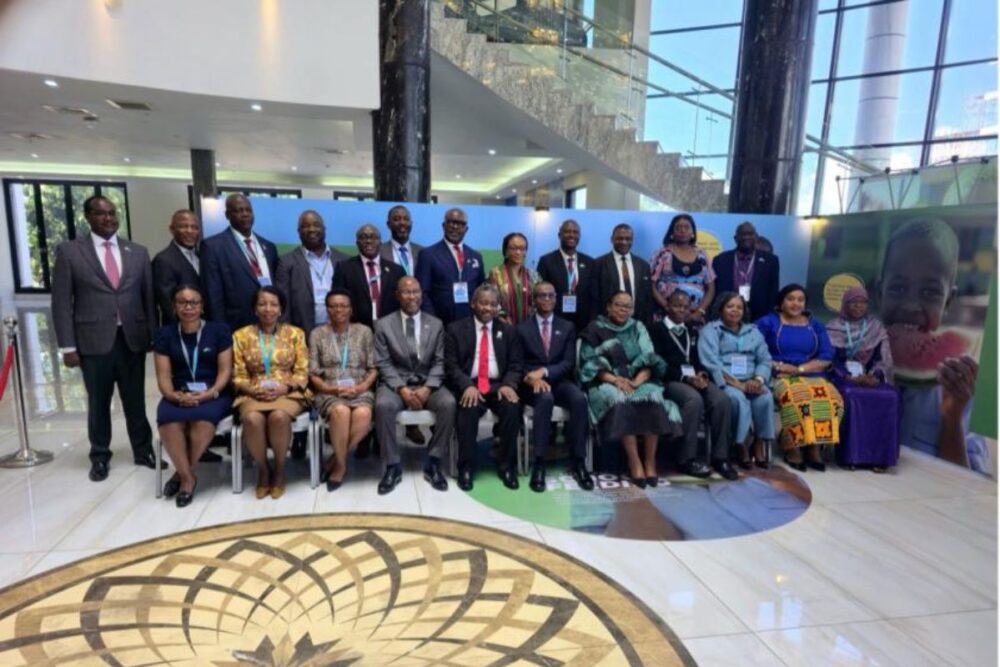
The African Union Commission, in collaboration with the Government of the Republic of Botswana and development partners, commemorated the 11th Anniversary of the African Day of School Feeding in Gaborone, Botswana, under the theme “Ensuring Access to Nutritious Meals, Clean Water, and Hygiene: Promoting Safety and Resilience in Every School Meal Investment.” The event marked a key milestone in assessing progress over the past decade in implementing school feeding programmes across the continent and reaffirming commitments to sustain and scale up these initiatives.
Marking African Day of School Feeding
While the broader celebrations began on 28 February, the official African Day of School Feeding is designated as 1 March by the Assembly of Heads of State and Government of the African Union, through Assembly Decision AU Assembly 589 XXVI. Since its endorsement by AU Member States in 2016, the day has highlighted the vital role of school feeding programmes in strengthening education, child well-being and food security across Africa.
The high-level commemoration was attended by the Vice President of the Republic of Botswana, His Honour Ndaba Nkosinathi Gaolatlhe; H.E Prof. Gaspard Banyankimbona, Commissioner for Education, Science, Technology and Innovation at the African Union Commission; representatives from the World Food Programme; and other key partners. Ministers of Education and Agriculture from AU Member States, international organisations and development stakeholders also took part.
School Feeding as a Driver of Equity and Growth
Delivering a message on behalf of President H.E. Advocate Duma Gideon Boko, the Vice President described school feeding not merely as a social programme but as a foundation for educational equity and economic empowerment.
“A well-fed child is a child ready to learn, to grow, and to succeed.”
His Honour Ndaba Nkosinathi Gaolatlhe, Vice President of the Republic of Botswana
He promoted sourcing food from local farmers, highlighting the dual benefit of nourishing children while stimulating rural economies and supporting sustainable livelihoods. He called for governments, communities and the private sector to work together to expand and strengthen these programmes.
Scaling Impact Across the Continent
Representing the AUC Chairperson, Prof. Gaspard Banyankimbona praised Botswana’s 60-year history of providing school meals, describing it as an example for the continent. He noted that school feeding programmes now reach over 86 million children across Africa, with member state investments nearly doubling over the past decade. Emphasising the economic case for continued investment, he said,
“Reports indicate that for every dollar invested in school feeding, there is an economic return of up to $9 through improved health, education, and local agricultural development.”
Prof. Gaspard Banyankimbona, AUC Chairperson
Linking the theme to the African Union’s 2026 focus on water and sanitation, he stressed,
“Clean water and safe sanitation are not luxuries; they are essential pillars for health, dignity, and effective learning.”
Prof. Gaspard Banyankimbona, AUC Chairperson
He added that nutritious meals must be integrated with comprehensive Water, Sanitation and Hygiene programmes in schools. He championed the Home-Grown School Feeding model as central to empowering smallholder farmers and strengthening community resilience.
He concluded with a call for increased domestic financing, stronger policies, cross-sector collaboration and renewed commitment from Member States and partners to ensure universal access to safe and nutritious school meals.
International Partnerships and Shared Commitment
Brazilian Ambassador to Botswana, Amb. Joao Genesio de Almeida Filho, highlighted cooperation between Brazil and the African Union on school feeding. He noted that Brazil’s national programme, serving more than 40 million students annually, offers a model for integrating school meals into national education systems.
The Executive Director of the World Food Programme, Cindy McCain, commended African governments for expanding school feeding coverage from 66 million children in 2022 to 87 million today. She noted that AU Member States now provide more than 70 per cent of funding, demonstrating strong domestic commitment. The World Food Programme reaffirmed its partnership with the African Union and Member States to ensure every African child has access to education and proper nutrition. As Africa looks towards the next decade, leaders reaffirmed their commitment to scaling up investment, strengthening policy implementation and deepening cooperation to ensure that no child is left behind.