
Malika Zaboumi, Founder of Lee Learning Hub in London, brings a global perspective shaped by her Moroccan roots, French education and British professional experience. Following an extended period attending educational networking events across the UAE, her reflections highlight a critical question facing education systems today: how does the rapid push towards artificial intelligence and global trends affect learners in regions where access to technology remains limited.
Global Trends and Local Realities
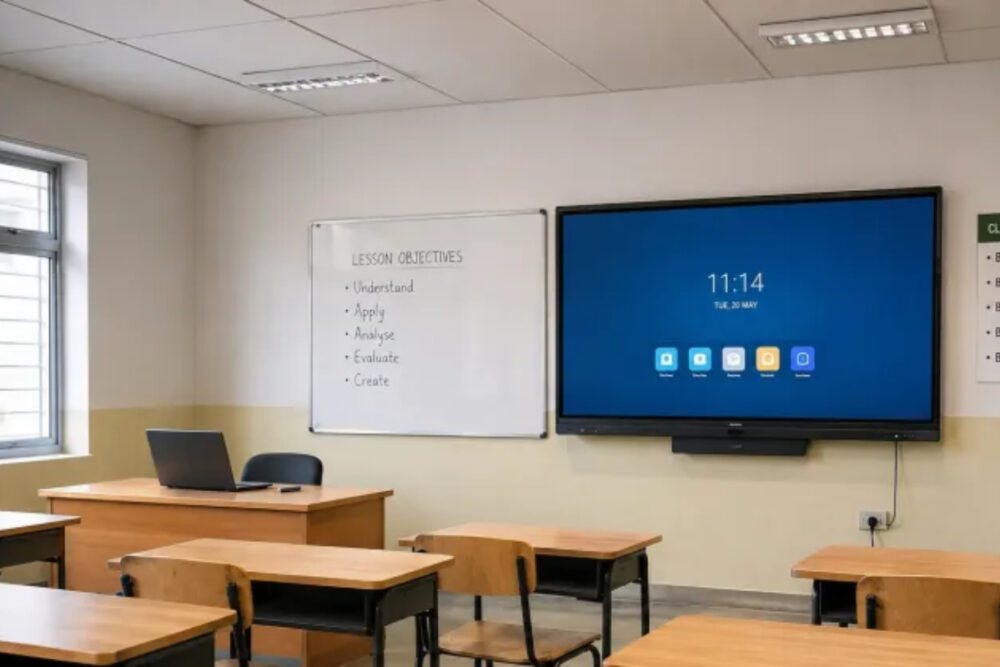
Across the Middle East and Western education systems, artificial intelligence is increasingly positioned as a cornerstone of educational innovation. It is reshaping curriculum design, assessment models and personalised learning pathways. However, this rapid evolution raises concerns when viewed through the lens of regions where basic educational infrastructure remains uneven.
In Morocco, there are 14 international schools, largely concentrated in Casablanca, Rabat, Marrakech and Tangier.
These schools offer British IGCSE and A Level programmes, the French Baccalaureate, American curricula and the International Baccalaureate. Alongside these, the country has more than 7,564 private schools educating over 1.2 million pupils, representing approximately 15 percent of the school population. Growth remains concentrated in economically stable urban centres where demand and delivery can be sustained.

The Digital Divide in African Education
Despite these developments, a significant proportion of learners across Africa remain disconnected. More than 65 percent of children attend schools without reliable connectivity, meaning access to basic ICT tools, educational apps and AI-based learning is largely out of reach. This challenge is compounded by the limited availability of devices for both learners and teachers.
UNESCO data from 2023 indicates that over 70 percent of children in sub-Saharan Africa lack access to basic digital learning tools, let alone AI-integrated instruction. While artificial intelligence is accelerating globally, educators across the continent are often expected to adapt without adequate training or resources.

Teacher Training and Systemic Readiness
The success of any educational transformation depends on teacher preparedness.
World Bank figures from 2022 show that only 24 percent of teachers in low-income African countries have received any form of ICT training.
Without targeted investment in digital and AI competencies, educators risk being unable to guide learners through the demands of a modern, technology-driven economy.
Globally, several forward-looking nations are embedding AI literacy into teacher training programmes. These approaches demonstrate that meaningful AI integration is not defined solely by infrastructure, but by empowering educators to adapt, innovate and lead within their classrooms.

Balancing Innovation with Tradition
Africa stands at a pivotal educational moment. While the continent faces the risk of falling behind in digital education, it also holds deep-rooted pedagogical traditions grounded in consistency, cognitive development and cultural context. Traditional learning methods, including book-based instruction and structured language learning, continue to play a vital role in building intelligence and resilience.
Educational progress does not require abandoning these foundations. Instead, there is an opportunity to build upon them gradually, integrating digital tools where appropriate while preserving accessible and effective teaching practices.

Linguistics as a Resilient Educational Anchor
Language learning remains one of the most inclusive and adaptable areas of education during this period of transition. Linguistics supports cognitive development, cultural identity and human connection, regardless of technological access. It provides learners with transferable skills that can later be applied to technical and digital domains as access improves.
As artificial intelligence reshapes global education, linguistics continues to serve as a bridge between tradition and innovation. It prepares learners to engage with future technologies while remaining grounded in communication, critical thinking and cultural understanding.

A Strategic Path Forward
The long-term sustainability of African education systems depends on balanced investment. Teacher training in AI and digital skills must be recognised as a strategic necessity rather than a luxury. At the same time, linguistic traditions and proven pedagogical methods should be protected and strengthened.
Africa’s capacity to learn and adapt remains unchanged. By expanding digital access, equipping educators with relevant skills and reinforcing language education as a foundational pillar, education systems can evolve without losing their core strengths. Innovation and tradition are not opposing forces but complementary elements in shaping resilient, future-ready learners.